ADVERTISEMENT
A Shift From “Good Manners” to Real Empathy
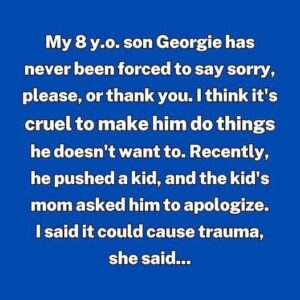
For a long time, I believed that teaching good manners meant reminding my son to say “thank you” and “sorry” whenever the situation called for it. Like many parents, I thought these words were an important part of raising a kind and respectful child.
But over time, I started to question whether repeating these phrases on command was really teaching empathy. I realized that when children are pushed to say certain words before they truly understand why, those words can lose their meaning. Instead of expressing genuine gratitude or remorse, they can become automatic responses meant only to satisfy adults.
That realization changed my parenting approach. Today, I no longer force my son to say “thank you” or “sorry.” Instead, I focus on helping him understand the feelings behind those words, believing that real empathy is far more valuable than polite habits alone.
My Childhood Shaped the Way I Parent
The way we parent is often influenced by the way we were raised.
Growing up, my home was filled with strict rules and high expectations. Good manners were expected at all times, and making mistakes often resulted in criticism rather than understanding. While I learned to be polite, I also carried emotional struggles that stayed with me for years.
ADVERTISEMENT