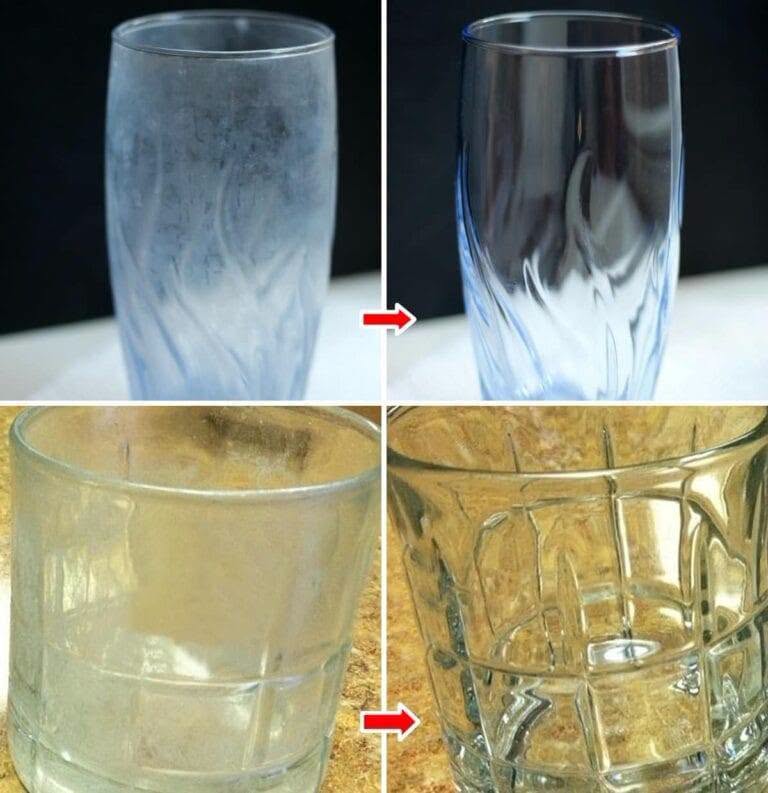
ADVERTISEMENT
If the Cloudiness Doesn’t Go Away
Sometimes cloudy glassware isn’t caused by mineral deposits alone.
If vinegar doesn’t help, the glass may actually be etched.
Etching happens when:
- Dishwasher detergent is too harsh
- Water temperature is too high
- The surface becomes permanently worn over time
Unlike limescale buildup, etching cannot usually be reversed because the glass itself has been damaged.
A quick test:
- If the haze feels rough or disappears temporarily when wet, it’s likely mineral buildup.
- If it stays permanently dull, etching may be the cause.
Tips to Prevent Cloudy Glasses in the Future
To keep glasses sparkling longer:
Use Less Dishwasher Detergent
Too much detergent can leave residue and contribute to etching.
Add Rinse Aid
Rinse aids help reduce mineral spots and improve drying.
Avoid Overheating
High dishwasher temperatures may damage delicate glass over time.
Dry Glasses Immediately
Hand-drying with a microfiber cloth helps prevent water spots.
Use White Vinegar Occasionally
A quick vinegar soak every few weeks can help stop buildup before it becomes noticeable.
A Simple Kitchen Ingredient That Still Works Wonders
In a world full of expensive cleaning products, it’s surprisingly satisfying when an old-fashioned household trick still works best.
Sometimes restoring cloudy glasses doesn’t require replacing them at all —
just a little patience and a splash of vinegar.
Because nothing feels quite as clean as glass that finally sparkles again.
ADVERTISEMENT